
Strategic partnerships serve as the bridge between your current capacity and the widespread community impact you aspire to achieve through enhancing operational capacity, resources, and a broader pool of innovative ideas. We are excited to highlight the strategic partnership success story between Morgan’s Multi-Assistance Center (MAC) and the University of Texas at San Antonio (UTSA). Their joint research initiative explores inclusive volunteer training methods and provides valuable insights and actionable tips for success. To dive deeper into this impactful journey, check out this webinar.
Morgan’s Multi-Assistance Center
In 2010, Morgan’s Wonderland opened its doors as the nation’s first ultra accessible theme park. The park’s mission was to create an inclusive space for visitors with and without disabilities to come together and play alongside one another. This was inspired by founders Gordon and Maggie Hartman’s daughter, Morgan. Morgan serves as the inspiration behind every endeavor taken on by Morgan’s Non-Profit Enterprise.
MAC is one of seven businesses under Morgan’s Non-Profit Enterprise. MAC’s main purpose is to “improve the lives of individuals with disabilities and special needs through comprehensive and coordinated services.” The services provided through MAC are delivered in accordance with standards that reflect their care model, built on a person-centered philosophy to adequately identify the gaps or barriers an individual may be experiencing.
An essential component of the MAC team are navigators. Navigators serve as a single point of contact and support for the individuals or the families that have a loved one with a disability or special need, in helping them create a road map for coordinated care and access to that care, whether it's medical therapy, social services, or other forms of care.
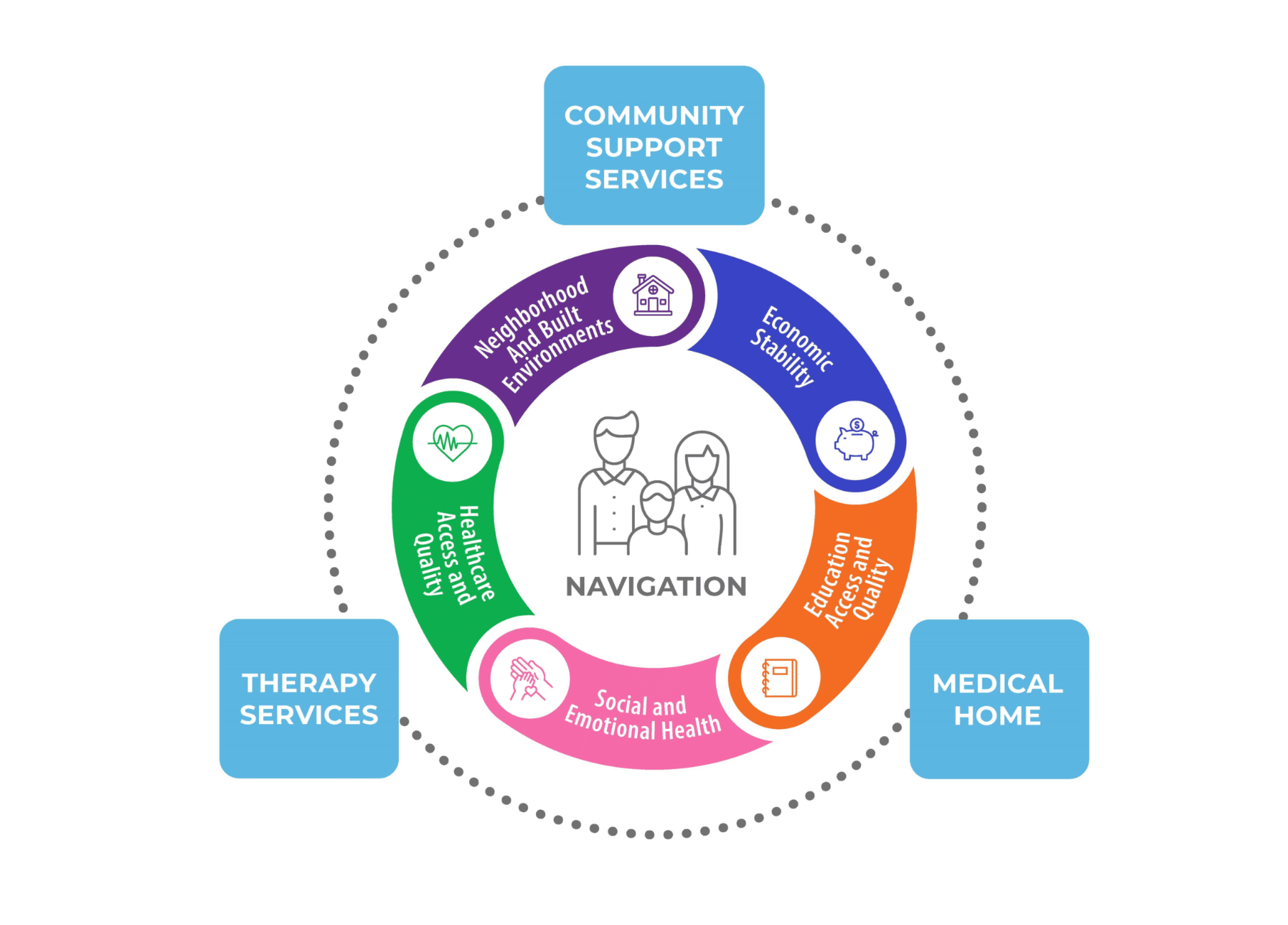
Morgan’s Multi-Assistance Center (MAC)- Care Model
MAC & UTSA Partner to Revolutionize Inclusive Volunteering
MAC operates a highly inclusive volunteer program overseen by Sara Patton, MAC Director of Community & Partner Engagement. Data gathered via the GivePulse platform shows that approximately 44% of its 55 active volunteers have disabilities or special needs.
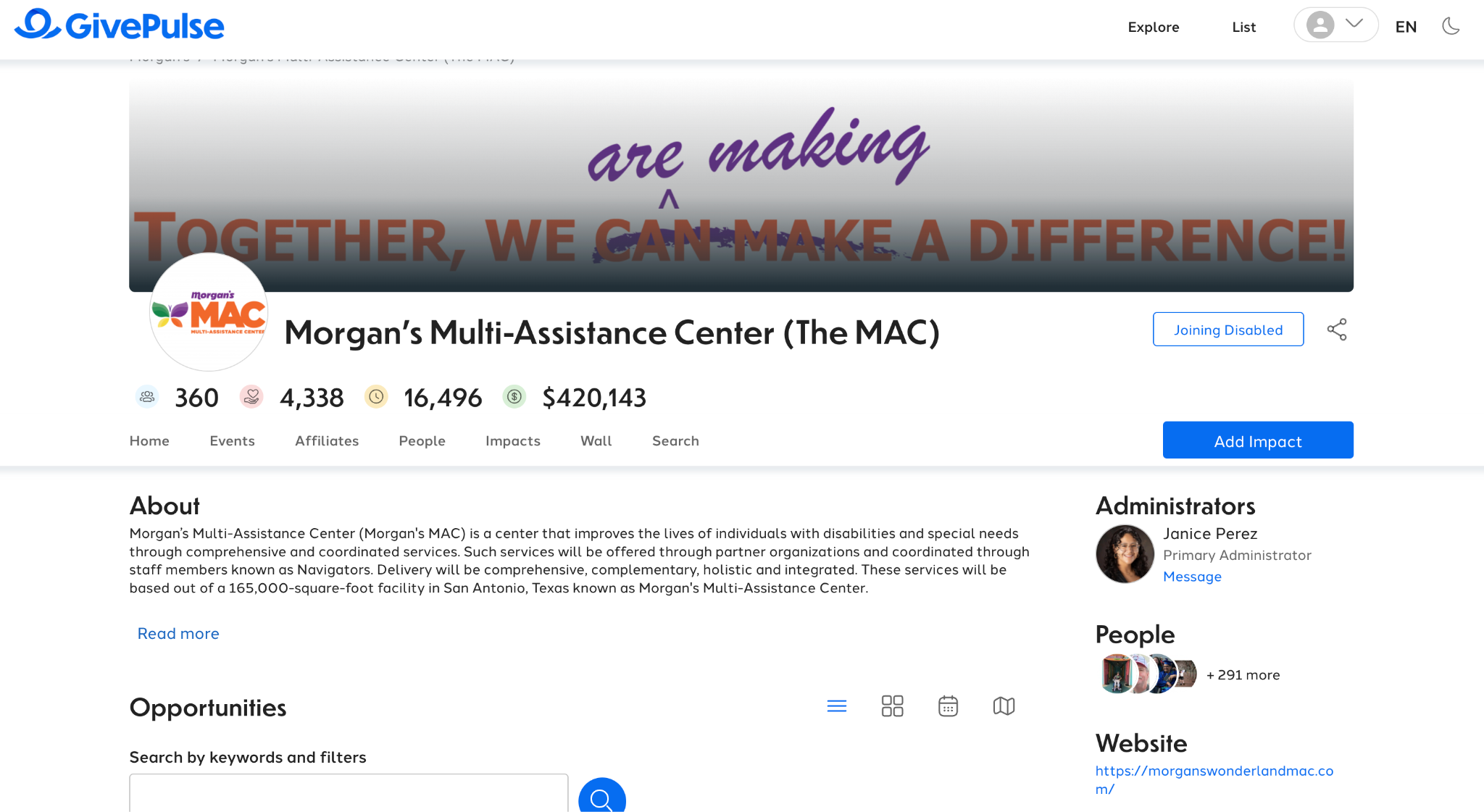
“So for me it was thinking about how I can ensure that the people that were serving through navigation, that may have a disability or special need, are going to be able to participate in meaningful opportunities to be able to give back and get connected with others.”- Sara Patton, Director of Community & Partner Engagement, MAC
As this program progressed, a high-impact partnership was formed between MAC & UTSA to further research effective job training methods for individuals with disabilities. The Evaluation and Research Coordinating Center (ERCC) at MAC, in collaboration with UTSA, secured funding for this research project via seed grants from Congressman Joaquin Castro’s office (20th District of Texas). Designed to promote interdisciplinary study, the initiative was driven by the Community-Based Participatory Research (CBPR) methodology. This framework is described by the Detroit Urban Research Center as a "collaborative approach that equitably involves community members, organizational representatives, and academic researchers in all aspects of the research process".
Strategic Partnership Blueprint: Lessons from the MAC and UTSA Collaboration
Who/What All Do You Need To Be a Part Of The Team?
Identify the essential members of your team and ensure it is representative of all stakeholders: do you require certain community representatives, a specific organization, a researcher, or an expanded group of caregivers? For the MAC & UTSA partnership, bringing in UTSA to lead the research portion proved invaluable, introducing us to Katie Holloway, a doctoral student and Lab Manager at the UTSA Behavior Analysis Department.
"It's a really important conversation to have whenever anybody's entering these kinds of relationships because it's not only like ‘this is what we want to do/this is what I can do’ at the end of the day I have x percentage of my week; I can give you an hour a week what can we do with that…or I can only give you an hour but I have a research assistant or a student who could probably do like 10 hours, so being really hyper aware of what resources you're bringing to the table and what is actually going to be feasible for accomplishing a project.”- Katie Holloway- Doctoral Student/ Lab Manager, UTSA Behavior Analysis Department
Define The Strengths & Resources Possessed By Each Stakeholder
In strategic partnerships, stakeholders should be equal contributors to the shared project, and each of their offered skills, talents, and resources should be strategically leveraged and enhanced. To successfully achieve this, it’s important to dedicate time to documenting each stakeholder's skill set early on in the partnership process.
For instance, in the case of the MAC & UTSA partnership, Katie utilized her expertise in behavioral analytics, grant writing, and project management, while Sara contributed her proficiency in volunteer management and partnership cultivation, along with her deep understanding of the MAC volunteer community.
“So like from a UTSA perspective, I'm a BCBA so I’ve got a lot of behavior analytic expertise, I’ve written grants before and ran research projects before; so I can kind of take care of that side, but Sara knows all about the volunteers themselves, the volunteer system and she knows how to collaborate with other organizations and establish those partnerships.” - Katie Holloway- Doctoral Student/ Lab Manager, UTSA Behavior Analysis Department
Set a Unified Long-Term Vision and Incremental Short-Term Goals to Achieve Success
From there, the initial step in the collaboration should involve envisioning the ideal or desired outcome without letting current limitations such as budget or timeframes narrow your goals. Through this process, the partners established a primary long-term goal. The primary objective established by MAC and UTSA was to increase the availability of inclusive, paid employment opportunities.
“Our long-term goal is to improve the access to paid and inclusive employment opportunities; a smaller step towards this is: can we define what that inclusion means and can we provide some foundational vocational skills within their volunteer opportunities that could potentially be generalized to other employment settings.”- Katie Holloway- Doctoral Student/ Lab Manager,- University of Texas at San Antonio- UTSA Behavior Analysis Department
Once you have defined your overarching, long-term vision, the next step is to operationalize that ambition by setting realistic, short-term goals. While the long-term vision serves as your North Star, your short-term objectives must be rooted in your current operational capacity, budget, and timeline. Effective execution requires breaking down complex goals into manageable, iterative milestones. This strategy ensures progress remains steady and measurable without overwhelming your team or resource limits.
“With nine months and $25,000 we can't accomplish that whole goal so we broke that situation down into smaller goals steps and projects and then identified between the two of us, ‘do we have all the skills to do something like this; no we got to bring on some more people,’ so then after we had developed our team, we identified what was feasible within the timeline and the budget of the grant.”- Katie Holloway- Doctoral Student/ Lab Manager,- University of Texas at San Antonio- UTSA Behavior Analysis Department
Ready, Set, Go!
With your long & short term goals strategically set, you are now ready for the implementation stage!
“So we sat down and figured out what exactly we wanted or what are the potential ways of quantifying what inclusion means and we put those into a survey…really trying to capture not only what their personal definition of inclusion is but what does that ideal inclusive environment look like.”- Katie Holloway- Doctoral Student/ Lab Manager,- University of Texas at San Antonio- UTSA Behavior Analysis Department
In order to meet the goal of defining inclusion, a survey was designed to be passed along to MAC ambassadors. The survey received responses from 25 people, and 10 qualitative interviews were supplemented with any required accommodations.
The survey given to MAC ambassadors included questions like the following:
- What does inclusion mean to you in this setting?
- What does inclusion mean to you in your life as a whole?
- Tell us a little bit about a time when you didn't feel included.
- Is there anything that we could be doing better?
To explore the survey results, view the full webinar.
In the quest to provide foundational vocational skills, the project implemented a four-step adult learning model consisting of visual/written instructions, modeling, role-playing, and explicit feedback.
“It’s important to make sure that everybody is kind of walking into the situation on the same page, so in baseline we did kind of a business as usual… I played the role model a lot, but I also had some of my students do it too where they would approach and ask some questions and we were measuring how that person was or how the participant was responding based on a list that we put together of all the skills that we would want to see in that situation.”- Katie Holloway- Doctoral Student/ Lab Manager,- University of Texas at San Antonio- UTSA Behavior Analysis Department
Building Forward: Scaling Short-Term Success into Long-Term Impact
Every short-term goal reached, places you one step closer to reaching your ultimate long-term goal. By breaking your ultimate vision into achievable milestones, you create a foundation of momentum that transforms ambition into reality. These incremental successes not only validate your strategy but also provide critical learning opportunities, allowing you to refine your approach, build stakeholder confidence, and maintain the focus necessary to navigate the path toward your final objective.
“So what this research collaboration kind of set up for us was future research opportunities, dissemination of new information and potential for continued funding… so within that future research piece we are going to be able to use that definition of inclusion and those measurements to continue to inform not only the validity of the projects that we're providing, but also program acceptability, social validity, and potentially implementing those across other organizations… and then ideally continuing the behavioral skills training with more ambassadors and generalizing to new environments, new skills and potentially training other macros and the rest of Sara’s staff.”- Katie Holloway- Doctoral Student/ Lab Manager- University of Texas at San Antonio- Behavior Analysis Department
Check in on the progress of the MAC & UTSA Partnership.
Powering Your Strategic Partnerships with GivePulse
The GivePulse platform is equipped with a comprehensive suite of tools and features designed to bolster community collaboration and guide you in building strategic partnerships. Acting as an all-encompassing data center, GivePulse enables organizations to affiliate with businesses, colleges, city departments, and other nonprofits to foster connections and exchange data. Furthermore, the GivePulse survey utility facilitates the gathering of continuous feedback from stakeholders, volunteers, and qualitative data.
Schedule a demo with our team to learn how GivePulse is essential in forming strategic partnerships.
About GivePulse
GivePulse's mission is to enable everyone in the world to participate and engage in lifting their community to new heights. We do so by providing a platform to list, find, organize, and measure the impact of service-learning, community engagement, philanthropy, corporate social responsibility, and volunteerism.
Founded in 2012 in Austin, Texas, GivePulse works with 650,000+ groups, including colleges and universities, nonprofits, businesses, K-12/school districts, and cities and municipalities. Together, we connect millions of people in an effort to create positive social change.